
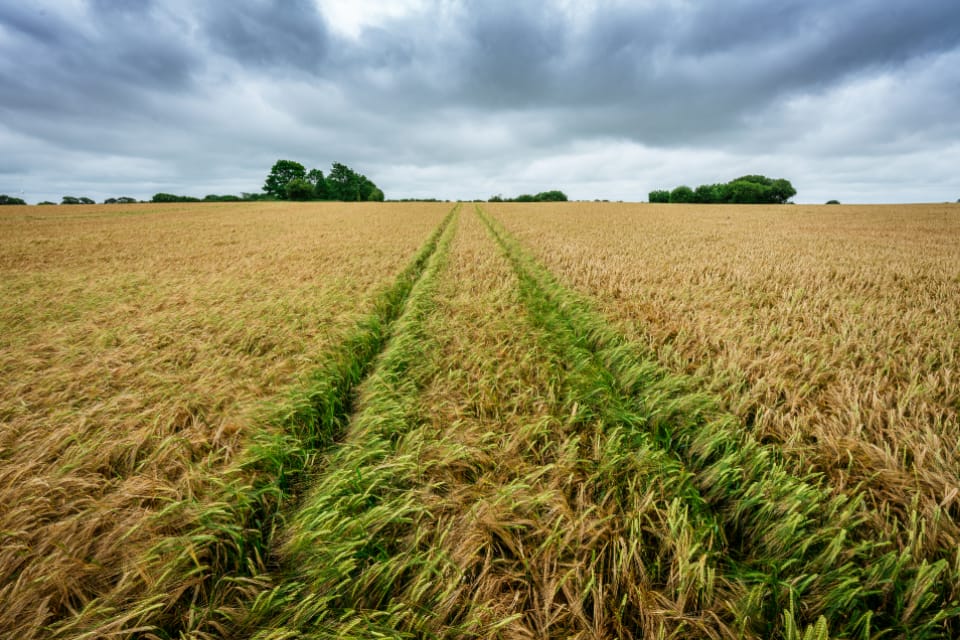
A standard Wisconsin homeowners policy stops protecting you the moment your property crosses from residential to farm use. It typically excludes or sharply limits farm structures like barns and grain bins, farm equipment and machinery, farm-specific liability, and livestock almost entirely — gaps most owners don't discover until they file a claim. Here's exactly where the line falls, and what actually closes it.
Western Wisconsin farm country, by the numbers
Source: USDA NASS 2022 Census of Agriculture, Wisconsin County Data.
Why a homeowners policy stops at the farmhouse door
Homeowners policies are priced and underwritten around residential risk — a house, attached structures, and personal belongings, with an assumption that nothing on the property generates commercial activity, keeps livestock at scale, or runs heavy equipment. The instant that assumption breaks, the actual risk on the property no longer matches what the homeowners premium was calculated for, which is exactly why standard forms exclude or cap farm-related structures, equipment, and liability rather than quietly covering them at homeowners pricing. A farm or farm/ranch policy exists specifically to price and cover that different risk profile — it isn't a homeowners policy with extra paperwork, it's built for a different exposure entirely.
Hobby farm vs. working operation — where the line actually falls
There's no single legal threshold that converts a "homeowners with acreage" situation into a "you need a farm policy" situation — carriers draw it differently, based on acreage, livestock headcount, whether real farm equipment is in use, and whether the operation generates commercial income. Many carriers offer a hobby-farm or farm-personal-property endorsement that extends a homeowners policy to cover a small acreage with limited livestock and no commercial farm income. Once equipment, livestock scale, custom work for others, or real farm income enter the picture, a standalone farm policy is typically the better-fitting product.
That gray zone describes a lot of actual western Wisconsin farm country. Per the USDA's 2022 Census of Agriculture, La Crosse County has 676 farms averaging 204 acres; Monroe County has 1,375 farms averaging 192 acres; Vernon County has 1,810 farms averaging 196 acres; and Trempealeau County has 1,193 farms averaging 249 acres — 5,054 farms combined across the four counties Hougom actively writes farm policies in. Most of these are far smaller than the sprawling commercial operation people tend to picture when they hear "farm insurance," which is exactly why sizing the coverage to the actual operation — not a stereotype of one — matters.
Equipment and machinery: why your auto policy doesn't help
Personal auto policies are built around licensed, road-registered vehicles. Farm equipment — tractors, combines, balers, implements — doesn't fit that mold and isn't covered by it. Instead, farm equipment is typically covered under scheduled farm personal property on a farm policy, with high-value or specialized machinery individually scheduled so a single piece of equipment isn't underinsured inside a blanket limit.
The scale of that exposure is real and, per the same Census of Agriculture data, substantial: the average estimated market value of machinery and equipment per farm runs $146,022 in La Crosse County, $158,672 in Monroe County, $134,433 in Vernon County, and $183,230 in Trempealeau County. For most working farms, that machinery line is the single largest insured-value item on the entire operation — larger than the farmhouse, in many cases. A blanket personal-property limit sized for a homeowners policy was never built to absorb that.
Farm liability: livestock, hired labor, and agritourism
Farm liability is broader than homeowners liability by design — it follows the operation itself, not just incidents at the house. Three areas deserve specific attention because Wisconsin law treats them specifically:
Hired labor and workers' compensation
General farm liability is not the same coverage as workers' compensation. Under Wis. Stat. § 102.04(1)(c), a Wisconsin farming operation becomes subject to the state's worker's compensation law once it employs 6 or more employees on any 20 consecutive or nonconsecutive days in a calendar year — coverage requirements take effect 10 days after that 20th day is reached. Below that threshold, workers' comp may not be legally required, but an injured hired hand — even seasonal or part-time help — can still bring a liability claim against the farm, and that's a separate exposure from both workers' comp and standard farm liability. We flag this specifically rather than assume it's covered somewhere.
Livestock on and off the property
Livestock coverage — mortality, and depending on the carrier, theft — is typically added by endorsement or a separate schedule, not automatic on every farm policy. Separately, livestock liability matters just as much: an animal that gets loose and causes a road accident or property damage off the farm is a liability exposure a standard homeowners policy typically never anticipated in its pricing.
Agritourism: real legal protection, but a narrow one
If you run a U-pick operation, a farm stand, or another public-facing activity, Wisconsin does provide some statutory protection — but it's narrower than most operators assume. Under Wis. Stat. § 895.524, an agricultural tourism provider is immune from civil liability for a visitor's injury or death that results from a risk inherent to the agricultural tourism activity — touring, exploring, or participating in an aspect of agricultural production, harvesting, or husbandry. That immunity comes with real conditions:
- You must post and maintain a specific warning notice — black lettering, each letter at least one inch tall, on a white background — at each entrance to the property or activity location, or the immunity doesn't apply.
- Immunity does not apply if you acted with willful or wanton disregard for a participant's safety, including failing to exercise ordinary care about a known danger.
- Immunity does not apply if you intentionally caused the injury or death.
In other words, the statute protects you from the inherent, unavoidable risks of bringing the public onto a working farm — it does not protect you from a hazard you knew about and didn't warn people of, or from skipping the signage. That gap between what the immunity law covers and what it doesn't is exactly the territory a farm liability policy with an agritourism endorsement is built to close.
Getting coverage sized to your actual operation
Farm risk doesn't fit a single underwriting box — a five-acre hobby operation, a working dairy, and a row-crop farm with an agritourism side business all carry genuinely different exposures, and not every carrier has an appetite for every type. This article covers what's different and why it matters; the practical next step is comparing real coverage and pricing for your specific operation. Our farm insurance page covers what a policy includes line by line, what drives the cost, and how to get a free comparison across the carriers we work with — including the crop insurance, workers' comp, and agritourism-liability gaps a generic quote often leaves unaddressed.
Ready to see what a farm policy would actually cost for your operation? We compare farm-specialty and standard carriers side by side, sized to your acreage, equipment, and livestock — free, no obligation. Call or text (608) 799-8434 or schedule a free farm insurance review.
Frequently Asked Questions
Does homeowners insurance cover my barn?
Generally no. Standard homeowners policies are underwritten around a residence and personal belongings, and most exclude or sharply limit coverage for farm structures — barns, machine sheds, grain bins, silos — the moment the property has real farm use. Some carriers allow a small hobby-farm endorsement for limited outbuildings, but a working barn, machine shed, or grain bin is usually a farm-policy item, scheduled separately from the house.
Do I need separate farm liability insurance in Wisconsin?
If your property has any working farm use — livestock, custom work for neighbors, equipment operation, on-farm sales, or agritourism — yes, in most cases. Standard homeowners liability isn't written with farm business activity in mind, and Wisconsin's agricultural tourism immunity law (Wis. Stat. § 895.524) is narrow: it covers only injuries from risks inherent to the activity, requires a specific posted warning sign, and doesn't apply if you failed to warn of a known danger, acted with willful or wanton disregard, or caused the injury intentionally. A farm liability policy is what actually stands behind you outside those narrow protections.
What's the difference between a hobby farm and a working farm for insurance purposes?
There's no single legal line — carriers draw it differently — but the practical factors are acreage, livestock headcount, whether you run real farm equipment, and whether the operation generates commercial income. Many carriers offer a hobby-farm or farm-personal-property endorsement added to a homeowners policy for small acreages with limited livestock and no commercial income. Once you're running equipment, keeping livestock at scale, doing custom work, or earning real farm income, a standalone farm policy is typically the better fit. Per the USDA's 2022 Census of Agriculture, the average farm in La Crosse, Monroe, Vernon, and Trempealeau counties runs 192-249 acres — many operations here sit right in that gray zone, which is exactly why we size this individually rather than guess.
Is my tractor covered under my auto insurance policy?
No. Personal auto policies are built around licensed, road-registered vehicles; farm equipment — tractors, combines, balers, implements — is typically covered under scheduled farm personal property on a farm policy instead, separate from any auto policy. Per USDA Census of Agriculture data, the average Wisconsin farm in this region carries $134,000-$183,000 in machinery and equipment value — often the single largest insured-value line item on the operation, which is exactly why high-value equipment gets individually scheduled rather than lumped into a blanket limit.
Do Wisconsin farms have to carry workers' compensation insurance?
It depends on how many people you employ. Under Wis. Stat. § 102.04(1)(c), a farming operation becomes subject to Wisconsin's worker's compensation law once it employs 6 or more employees on any 20 consecutive or nonconsecutive days in a calendar year — coverage requirements take effect 10 days after that 20th day. Below that threshold, workers' comp may not be legally required, but an injured hired hand can still bring a liability claim, and that exposure isn't covered by general farm liability. We flag this rather than let it fall through the cracks.
Does a farm policy cover my livestock?
Livestock mortality coverage is available, typically added by endorsement or a separate livestock schedule — it isn't automatic on every farm policy. Coverage and pricing depend on the type and number of animals. It also isn't the same question as farm liability: if your livestock causes an accident or injury off your property (an animal in the road, for example), that's a liability exposure a standard homeowners policy typically doesn't anticipate.
Sources
- USDA National Agricultural Statistics Service. 2022 Census of Agriculture — Wisconsin State and County Data, Volume 1, Geographic Area Series, Part 49 (AC-22-A-49), Table 1: County Summary Highlights. nass.usda.gov
- Wisconsin State Legislature. Wis. Stat. § 102.04(1)(c) — agricultural employer worker's compensation threshold. docs.legis.wisconsin.gov
- Wisconsin State Legislature. Wis. Stat. § 895.524 — agricultural tourism liability immunity. docs.legis.wisconsin.gov
Compliance disclosures: This article is for general information only and is not legal, tax, or insurance advice. Coverage availability, terms, and Wisconsin statutory requirements may change; confirm current details with a licensed agent before making a coverage decision. Hougom Insurance Agency is a licensed independent insurance agency (NPN 20742808). Figures cited reflect the sources and publication dates listed above.
Get your farm insurance comparison
We size farm coverage to your actual operation and compare it across multiple carriers — free, local, western Wisconsin-focused.